
Table of Contents
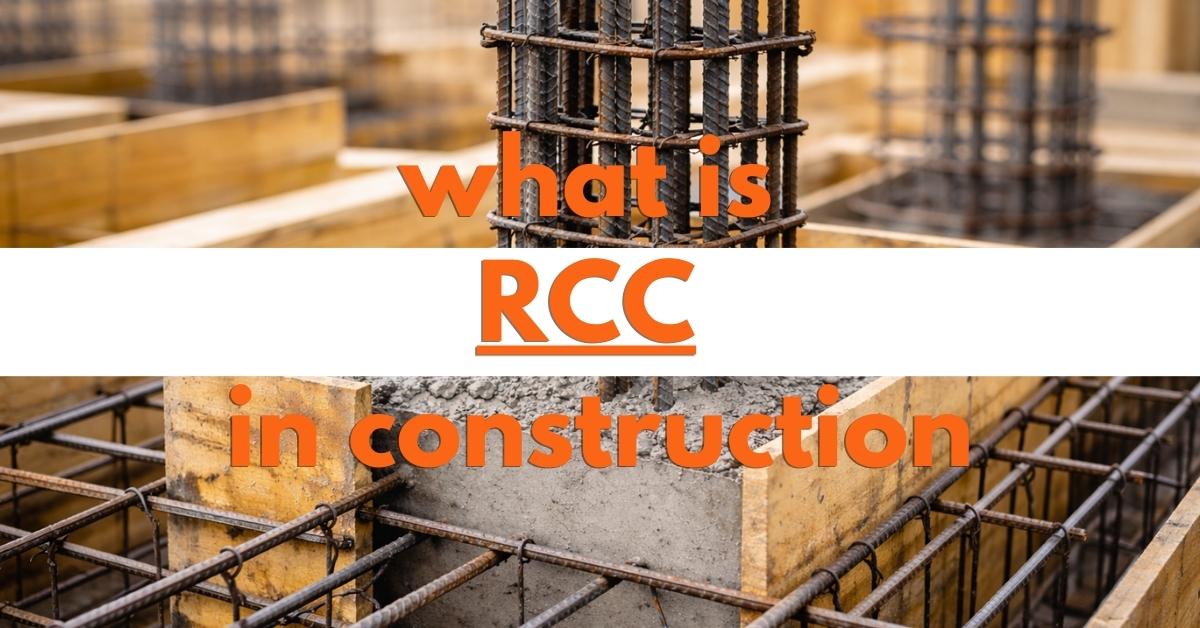
ToggleIf you’re wondering what is RCC in construction, it stands for Reinforced Cement Concrete, a composite building material composed of cement, sand, aggregates, and embedded steel reinforcement. This combination produces a highly durable and load-bearing structure, making RCC a vital component in modern building, from residential homes to large-scale infrastructure projects.
From the experience of people in the industry, RCC is a popular choice because it is very strong, stable, and can withstand things like moisture, heat, and changes in weather. In real-world applications, RCC is commonly used for slabs, beams, columns, and foundations. For instance, homeowners increasingly opt for RCC roofing slabs over traditional alternatives because they offer superior safety, longevity, and minimal maintenance—especially in regions exposed to harsh climatic conditions.
A complete understanding of What is RCC in construction also involves recognizing that its performance depends heavily on proper structural design, accurate mix proportions, and the correct placement of steel reinforcement. Even high-quality materials can fail if reinforcement detailing is poor. This is why construction experts and structural engineers emphasize adherence to engineering standards and best practices to ensure long-term durability, safety, and structural integrity.
What Is RCC in Construction?
RCC stands for Reinforced Cement Concrete, a construction material made by combining concrete with steel reinforcement bars (rebars).
Concrete alone is strong when compressed but weak when stretched or bent. Steel is strong in tension. When steel bars are embedded into concrete, both materials work together to handle different structural forces—creating a strong, stable, and long-lasting structure.
Simple Practical Explanation
Think of concrete as the body and steel as the skeleton. Without steel, concrete may crack under heavy loads. With reinforcement, it becomes capable of supporting buildings safely for decades.
Real-Life Construction Example
In almost every modern house, the roof slab, beams, and columns are made of RCC. These elements carry the entire weight of the building and transfer loads safely to the foundation.
Why RCC Is Widely Used in Construction Today
From real site experience, RCC is preferred because it balances strength, durability, safety, and cost efficiency.
Key Reasons Builders Use RCC
- Handles heavy structural loads
- Suitable for multi-story buildings
- Strong resistance to weather and fire
- Long lifespan with proper maintenance
- Flexibility for modern architectural designs
For example, in urban construction projects where open spaces and large living areas are required, RCC beams allow wider spans without adding too many support walls.
Types of RCC in Construction
Different construction projects require different RCC methods. Understanding these types helps choose the right approach.
1. Cast-In-Situ RCC
Concrete is mixed and poured directly at the construction site.
Common Uses:
- Residential homes
- Columns, beams, slabs
- Foundations
Why It’s Used:
Provides a strong single structure and allows design flexibility during construction.
2. Precast RCC
RCC components are manufactured in a controlled factory environment and later installed on-site.
Examples:
- Staircases
- Boundary walls
- Structural panels
Expert Insight:
Precast RCC is increasingly popular because it reduces construction time and improves quality consistency.
3. Prestressed RCC
Steel is tensioned before or after concrete casting to reduce cracks and improve structural performance.
Used In:
- Bridges
- Flyovers
- Long-span structures
Benefit:
Allows longer spans with less material, improving efficiency.
3. Prestressed RCC
Steel is tensioned before or after concrete casting to reduce cracks and improve structural performance.
Used In:
- Bridges
- Flyovers
- Long-span structures
Benefit:
Allows longer spans with less material, improving efficiency.
Main Materials Used in RCC
The strength of RCC depends on the quality of materials used.
Core Components
- Cement – binds materials together
- Fine aggregate (sand) – fills voids
- Coarse aggregate – gives structural strength
- Water – activates cement reaction
- Steel reinforcement – provides tensile strength
Experience-Based Tip:
On many sites, excessive water is added to make concrete easier to pour. This weakens RCC and can cause cracks later. Maintaining the proper water-cement ratio is crucial.
Uses of RCC in Building Construction
RCC is used in almost every load-bearing element of modern structures.
Structural Uses
- Foundations
- Columns
- Beams
- Slabs
- Staircases
- Retaining walls
Infrastructure Uses
- Bridges
- Dams
- Water tanks
- Parking structures
Real Construction Example
During residential projects, RCC columns allow interior layouts to remain flexible. Homeowners can modify room designs later without affecting structural safety—something difficult with traditional load-bearing walls.
Benefits of RCC in Construction
Understanding the RCC process helps homeowners monitor construction quality.
Step 1: Structural Planning
Engineers calculate loads and design reinforcement layouts.
Step 2: Formwork Setup
Temporary molds are installed to hold the concrete’s shape.
Step 3: Steel Reinforcement Placement
Steel bars are arranged according to structural drawings.
Step 4: Concrete Mixing
Concrete is prepared with accurate proportions.
Step 5: Concrete Pouring
Concrete is poured carefully to avoid segregation.
Step 6: Compaction
Mechanical vibrators remove air pockets to increase strength.
Step 7: Curing
Concrete is kept moist for 7–14 days to achieve proper strength.
Expert Observation:
Insufficient curing is one of the most common reasons for early cracking in residential construction.
Common Mistakes to Avoid in RCC Work
From practical construction experience:
- Wrong steel placement
- Poor quality aggregates
- Excess water in mix
- Improper compaction
- Short curing time
These mistakes may not show immediate problems but can reduce building life significantly
Final Expert Conclusion
In conclusion, clearly understanding what is RCC in construction empowers you to make safer, smarter, and more cost-effective building decisions. Reinforced cement concrete is not just a basic construction material—it is the backbone of modern infrastructure, offering unmatched strength, durability, and resistance to environmental stress over time.
From a professional standpoint, RCC plays a critical role in ensuring structural stability in everything from residential homes to large commercial projects. However, its long-term performance depends on key factors such as proper structural design, quality materials, and precise steel reinforcement. Even minor errors in execution can compromise the integrity of the entire structure.
Therefore, when using RCC, it is essential to follow industry best practices and work with experienced professionals to achieve optimal results. By doing so, you can ensure that your structure is not only strong and stable but also reliable, safe, and built to last for decades.