
Choosing the Best Cement for House Construction is one of the most important decisions when building a safe, durable, and long-lasting home. For most Indian families, home construction is not just a financial investment but an emotional milestone, and the quality of materials used—especially cement—directly impacts structural strength, safety, and long-term performance. Since cement forms the backbone of every structure, selecting the right option is essential to ensure your home remains strong, stable, and resistant to changing weather conditions for decades.
With so many cement brands and types available in India, it can be hard for homeowners to know which one is the best.The right choice depends on several real–world factors like the type of soil, the local climate, where you are in the building process, and how much money you have for the project. That’s why it’s better to rely on expert advice, real construction experience, and industry knowledge rather than just what is advertised.
In this guide, we give you an honest and practical comparison of the best cements for building houses in India. We look at important things like how strong the cement is, how long it lasts, how well it works in India’s weather, and whether it’s a good value for your money. Based on real construction experience and real–world insights, this article will help you make a smart and confident decision when building a safe, reliable, and future–ready home.
Table of Contents
ToggleWhy Choosing the Best Cement for House Construction Matters
Cement acts as the binding material that holds your house together. From the foundation to the roof slab, its quality directly impacts:
- Structural stability and load-bearing capacity
- Crack resistance and surface finish
- Performance in Indian weather conditions (heat, monsoon, humidity)
- Maintenance cost over the years
Using the right cement at the right construction stage ensures safety, durability, and peace of mind.
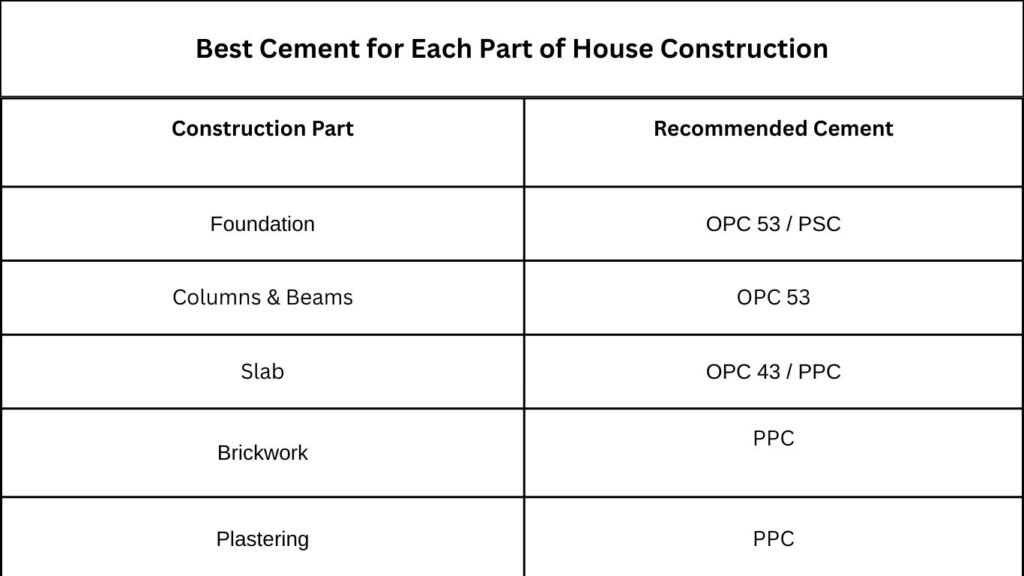
- OPC (Ordinary Portland Cement) – High early strength; best for slabs & RCC
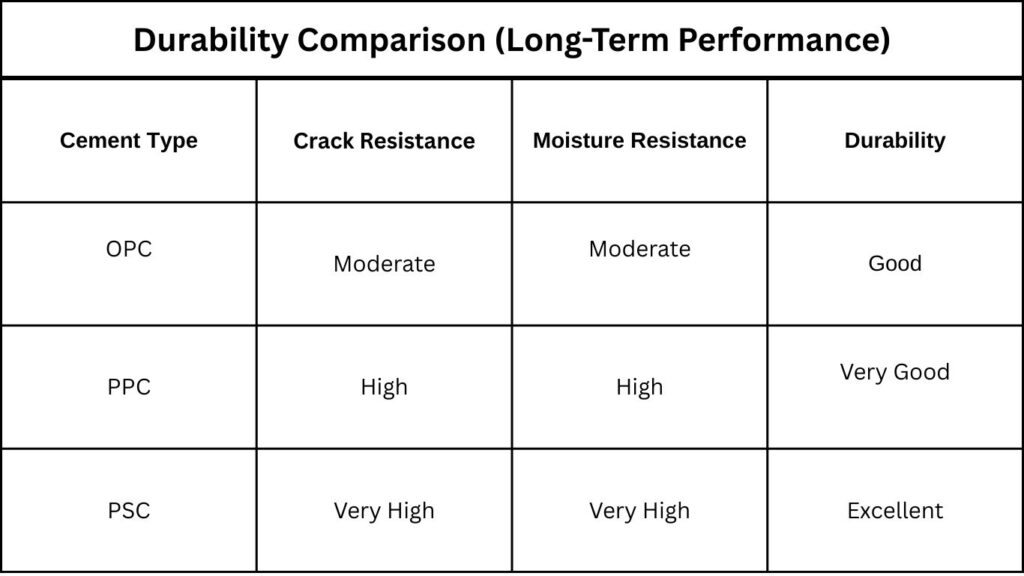
- PPC (Portland Pozzolana Cement) – Better durability; ideal for residential walls & plaster
- PSC (Portland Slag Cement) – Coastal & high-moisture areas
Below is a brand-wise review based on cement quality, consistency, site feedback, and structural performance.
Ordinary Portland Cement (OPC)
OPC cement is widely used in construction due to its high early strength
OPC 33 Grade
- Suitable for masonry and plastering work
- Not recommended for RCC structures
OPC 43 Grade
- Balanced strength and workability
- Used for residential slabs and general RCC work
OPC 53 Grade
- High early strength
- Best for columns, beams, and heavy RCC structures
- Requires skilled supervision to avoid cracks
Portland Pozzolana Cement (PPC)
Key advantages:
- Better long-term strength
- Reduced cracks
- Higher resistance to chemical attacks
- Eco-friendly option
Best use: Ideal for individual house construction, plastering, masonry, and long-term durability.
Portland Slag Cement (PSC)
PSC cement is made using blast furnace slag and offers excellent durability.
Key advantages:
- High resistance to sulfates and corrosion
- Suitable for coastal and high-moisture areas
- Longer setting time
Best use: Coastal houses, foundations in aggressive soil conditions.
Cement Grades Explained (33, 43 & 53 Grade)
Cement grade indicates its compressive strength after 28 days.
- 33 Grade: 33 MPa strength – light construction & plastering
- 43 Grade: 43 MPa strength – general residential RCC work
- 53 Grade: 53 MPa strength – heavy structural elements
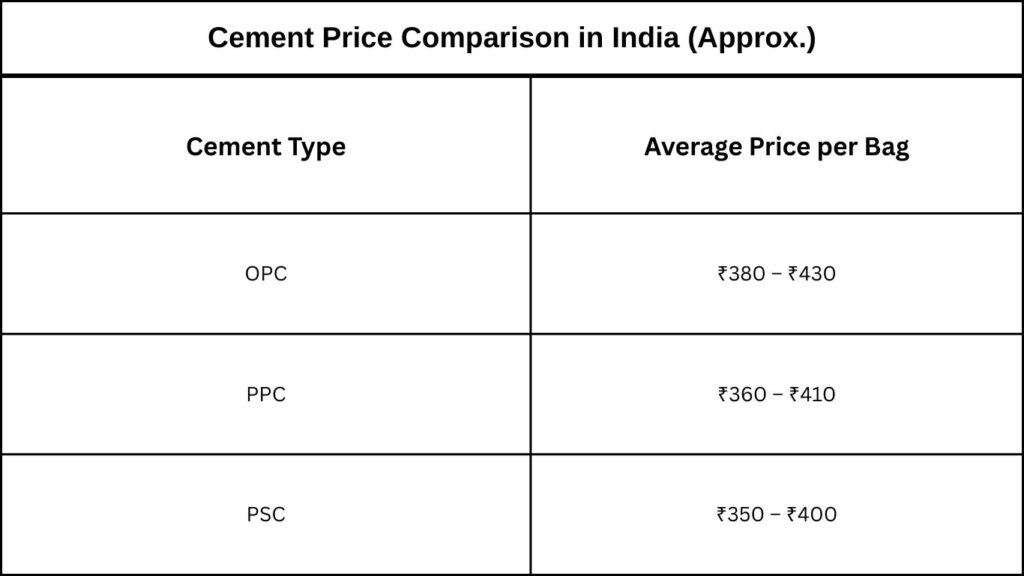
Which Cement Grade Is Best for House Construction?
- Foundation: OPC 43 or 53 grade / PSC
- Columns & Beams: OPC 53 grade
- Roof Slab: OPC 43 or PPC
Best Cement Brands in India for House Construction
- UltraTech Cement
- ACC Cement
- Ambuja Cement
- Shree Cement
- Dalmia Cement
- Ramco Cement
Always ensure the cement is ISI-certified and sourced from an authorized dealer.
How to Choose the Best Cement for Your House
- Understand soil and environmental conditions
- Use different cement types for different construction stages.
- Do not choose cement only based on price.
- Follow civil engineer recommendations
Common Mistakes to Avoid While Buying Cement
- Using OPC 53 grade for plastering
- Buying cement without the ISI mark
- Improper storage leading to moisture damage
- Overusing high-grade cement unnecessarily
Expert Tips from Civil Engineers
- PPC cement is best for most residential houses.
- Always store cement in dry, covered areas.
- Cement should be used within 3 months of manufacturing.
- Proper water-cement ratio is more important than cement brand.
Conclusion
Choosing the best cement for house construction is really important for creating a safe, strong, and long–lasting home. The right type of cement not only makes the structure stronger but also helps the house withstand weather changes better, lowers future repair costs, and makes the home last longer. Every construction project has its own unique needs, so it’s important to understand factors like quality, the stage of construction, local weather conditions, and your budget. This helps you make a better decision.
Rather than just picking cement based on popular brands or ads, homeowners should seek advice from experts and use real construction knowledge.
By looking at how strong, durable, and reliable different cements are in India’s real conditions, you can choose the best cement that fits your project. Making a smart choice now helps build a solid, safe, and trustworthy home that can be enjoyed for many years.
Frequently Asked Questions
Which cement is best for house construction in India?
PPC cement is ideal for most residential houses due to its durability and crack resistance.
Is PPC better than OPC?
Yes, PPC performs better in long-term durability and plastering quality.
How do I choose the right cement brand for my home construction?
To choose the right cement brand, consider cement freshness, consistency, climate suitability, and the specific construction stage. Always buy cement less than 30 days old, use one brand throughout the project, and consult a structural engineer rather than relying solely on dealer recommendations.