

Table of Contents
ToggleChoosing the best cement for house construction is one of the most important decisions you’ll make while building your dream home. While homeowners often focus on floor plans, interior design, and the overall house construction cost in India, experienced civil engineers know that the strength and durability of a building largely depend on the quality of cement used during construction.
From our experience in residential construction projects, one of the most common mistakes homeowners make is selecting cement solely based on price. Saving a few hundred rupees per bag may seem like a smart decision initially, but poor-quality cement can lead to wall cracks, roof leakage, weak plaster bonding, and costly maintenance issues in the future.
For example, a homeowner constructing a G+1 house selected a low-cost cement brand to reduce construction expenses. Within a few years, the building developed plaster cracks and moisture-related issues that required significant repair work. In contrast, homes built using high-quality cement and proper engineering practices generally perform much better over the long term.
Before purchasing cement in bulk, homeowners should also understand the role of what is called PCC in construction and how foundation materials influence the overall strength of a structure. With dozens of cement brands available in India, selecting the right option can be confusing. Factors such as strength, setting time, durability, weather resistance, and cost all influence which cement is best suited for your home.
In this expert guide, we compare the leading cement brands in India, explain the differences between OPC, PPC, and PSC cement, evaluate their strengths and weaknesses, and share practical recommendations based on real construction applications.
Why Cement Choice Impacts the Life of Your House
A house is only as strong as its structural core. Even when steel reinforcement and architectural design are excellent, poor cement selection can negatively affect building performance.
Common problems caused by unsuitable cement include:
- Roof slab cracks
- Water seepage during monsoons
- Damp walls
- Weak plaster bonding
- Reduced RCC strength
- Shorter building lifespan
Experienced engineers rarely use the same cement type throughout an entire construction project. Different stages require different performance characteristics.
Cement is generally selected based on:
- High-strength structural work
- Long-term durability requirements
- Moisture-prone areas
- Surface finishing applications
This is why understanding different cement types before purchasing is critical.
Ordinary Portland Cement (OPC) is widely used for high-load structural components because of its superior early strength.
Best Applications:
- Foundation work
- Columns
- Beams
- Roof slabs
- Lintels
Why Builders Prefer OPC Cement
OPC 53 Grade offers excellent compressive strength during the early stages of curing, making it ideal for RCC structures.
Advantages:
- High early strength
- Faster setting time
- Better load-bearing capacity
- Suitable for slab casting
For homeowners comparing cement grades, understanding OPC vs PPC Cement can help determine the right choice for different construction stages.
Portland Pozzolana Cement (PPC) is one of the most widely recommended cement types for residential construction.
Best Applications:
- Brickwork
- Masonry
- Internal plaster
- External plaster
- Humid climate regions
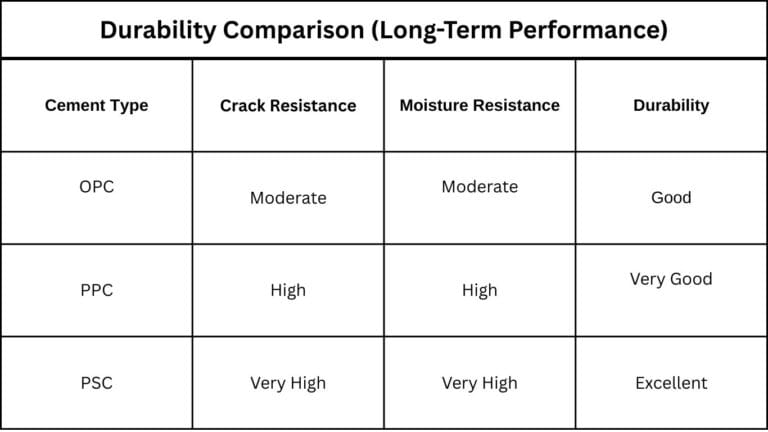
Why PPC Cement Performs Better Long-Term
Unlike OPC, PPC gains strength gradually and offers improved durability over time.
Advantages:
- Lower shrinkage cracks
- Better moisture resistance
- Improved workability
- Lower heat generation
- Enhanced wall durability
Many engineers consider PPC one of the most balanced options for Indian residential construction.
3) PSC Cement – Best for Moisture & Aggressive Soil
Portland Slag Cement (PSC) performs exceptionally well in aggressive environmental conditions.
Best Applications:
- Coastal regions
- Basements
- Water tanks
- Sulfate-rich soil
- High groundwater areas
Advantages:
- Excellent chemical resistance
- Superior moisture resistance
- Improved corrosion protection
- Long service life
Best Cement Brands for House Construction in India
UltraTech Cement remains one of India’s most trusted brands because of its consistent quality, strong distribution network, and excellent structural performance.
Best For:
- Foundations
- Columns
- Slabs
- RCC structures
Approximate Price:
₹440–₹460 per bag
Advantages:
- Consistent quality
- Excellent compressive strength
- Widely available
- Reliable performance
ACC Cement is highly preferred by contractors and engineers for structural construction projects.
Best For:
- Footings
- RCC frames
- Beams
- Slab casting
Approximate Price:
₹430–₹450 per bag
Advantages:
- Reliable setting time
- Strong bonding properties
- Excellent RCC performance
Dalmia Cement offers a good balance between quality and affordability.
Best For:
- Residential homes
- General construction
- Masonry applications
Approximate Price:
₹400–₹440 per bag
Advantages:
- Competitive pricing
- Reliable performance
- Good durability
Ambuja Cement performs exceptionally well during finishing stages.
Best For:
- Brickwork
- Plastering
- External walls
- Crack control
Approximate Price:
₹420–₹450 per bag
Advantages:
- Smooth finish
- Better workability
- Reduced plaster cracking
Cement Price vs. Performance: What Actually Matters
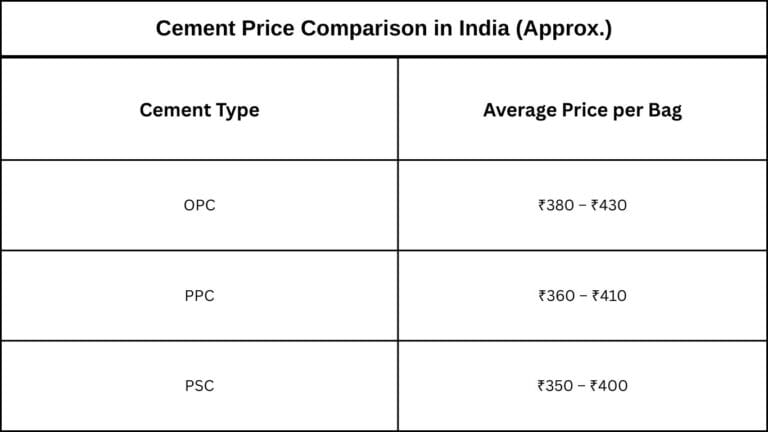
Which Cement Is Best for Each Part of the House?
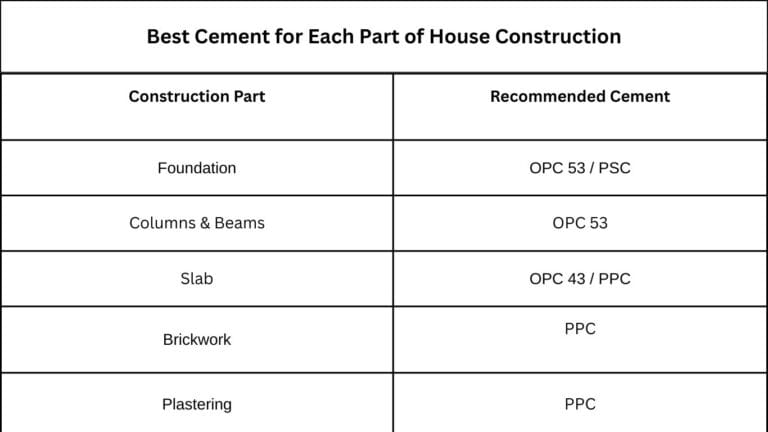
This is where most blogs stay generic. Here’s the real-use breakdown.
Foundation
Best choice:
- OPC 53
- PPC in moisture-prone soil
- PSC for aggressive groundwater
Roof Slab
Best:
- UltraTech OPC 53
- ACC OPC 53
Reason:
higher early strength + fast formwork cycle
Columns & Beams
Best:
- OPC 53 only
- avoid low-grade blended cement here unless engineer-approved
Brickwork
Best:
- PPC
- Ambuja / Dalmia
Plastering
Best:
- PPC or OPC 43
- smooth texture brands
Bathroom / Terrace Waterproof Zones
Best:
- PPC / PSC
- weather-resistant variants
This stage-wise selection creates better structural performance and lower crack risk.
How to Choose the Best Cement for Your House
- Understand soil and environmental conditions
- Use different cement types for different construction stages.
- Do not choose cement only based on price.
- Follow civil engineer recommendations
Homeowners planning a complete home construction project should also explore low cost construction materials that provide long-term value without compromising quality.
Common Mistakes to Avoid While Buying Cement
- Using OPC 53 grade for plastering
- Buying cement without the ISI mark
- Improper storage leading to moisture damage
- Overusing high-grade cement unnecessarily
To verify cement quality standards, homeowners can refer to the Bureau of Indian Standards (BIS) and the National Building Code of India.
Expert Tips from Civil Engineers
Based on practical residential construction experience:
- PPC cement is often the best choice for most residential homes.
- Store cement in dry and covered locations.
- Use cement within three months of manufacturing.
- Proper curing is as important as cement quality.
- Water-cement ratio significantly affects strength and durability.
For complete structural performance, quality materials should be combined with an experienced construction company in Bangalore and proper engineering supervision.
After structural construction is complete, homeowners often focus on false ceiling design, interior finishes, and planning the modular kitchen price to complete their dream home.
Conclusion
Selecting the best cement for house construction is not simply about choosing a popular brand. The right decision depends on your structural requirements, environmental conditions, budget, and long-term durability goals.
For most residential projects, a combination of OPC and PPC cement provides the ideal balance of strength and durability. OPC is generally preferred for foundations, columns, beams, and slabs, while PPC performs exceptionally well in brickwork, plastering, and moisture-prone areas.
Whether you’re comparing OPC vs PPC Cement, evaluating cement prices, or selecting the right cement brand for your home, investing in quality materials today can help prevent costly repairs tomorrow. Consulting experienced engineers and construction professionals before making a final decision can ensure better structural performance, safety, and peace of mind for years to come.
Frequently Asked Questions
1. Which is the best cement for house construction in India?
The best cement for house construction in India depends on the application. For foundations, columns, and roof slabs, OPC 53 Grade cement is generally preferred because of its high strength. For brickwork, plastering, and long-term durability, PPC cement is often considered the best choice for residential homes.
2. What is the difference between OPC and PPC cement for house construction?
OPC (Ordinary Portland Cement) provides higher early strength and is ideal for RCC structures such as beams, columns, and slabs. PPC (Portland Pozzolana Cement) gains strength gradually but offers better durability, moisture resistance, and crack prevention. Most engineers recommend using both cement types at different stages of house construction.
3. Which cement brand is best for building a house in India?
Some of the best cement brands for house construction in India include UltraTech Cement, ACC Cement, Ambuja Cement, and Dalmia Cement. These brands are known for consistent quality, strong compressive strength, and reliable performance in residential construction projects.
4. Is PPC cement better than OPC cement for residential houses?
PPC cement is generally better for plastering, masonry work, and long-term durability because it offers improved resistance to moisture and reduces shrinkage cracks. However, OPC cement remains the preferred choice for structural components where high early strength is required. The best approach is to use OPC and PPC cement according to the construction stage.
5. How do I choose the best cement for house construction?
To choose the best cement for house construction, consider factors such as structural requirements, soil conditions, climate, durability, and cement grade. Always buy ISI-certified cement from trusted brands and consult a qualified civil engineer before making a final decision. Choosing the right cement can improve building strength, reduce maintenance costs, and increase the lifespan of your home.