

Table of Contents
ToggleChoosing the right windows is a key part of building or renovating a home.Windows not only make your home look better but also help with ventilation, natural light, energy efficiency, and make your space more comfortable.In recent years, UPVC windows have become a favorite choice for many Indian homeowners because they are durable, easy to maintain, and provide good insulation.
Whether you are building a new home, replacing old wooden windows, or choosing between different window materials, this guide will help you understand everything you need to know before buying UPVC windows.
You’ll find information on types, benefits, cost, installation, and tips to help you make an informed decision.
What Are UPVC Windows?
UPVC (Unplasticized Polyvinyl Chloride) is a rigid and durable material widely used in manufacturing window and door frames. Unlike regular PVC, UPVC does not contain plasticizers, making it significantly stronger, more weather-resistant, and longer-lasting.
According to Plastics Europe, PVC is one of the world’s most widely used polymers because of its durability and versatility in construction.
Today, UPVC windows for home are widely preferred because they offer excellent insulation, require minimal maintenance, and withstand India’s diverse climate conditions.
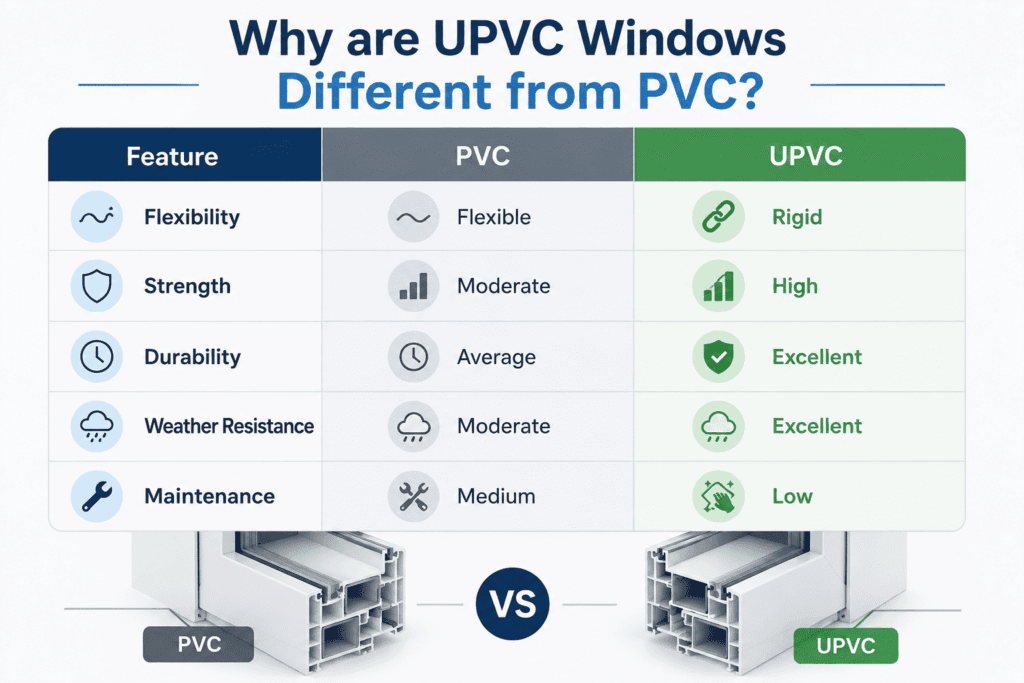
What Are UPVC Windows?
Because of these advantages, UPVC windows are commonly used in residential apartments, villas, independent houses, commercial buildings, and office spaces.
Why Are UPVC Windows Becoming Popular in India?
ndian weather varies dramatically across regions, from heavy monsoon rains and coastal humidity to scorching summers and dusty environments. Traditional wooden windows often warp, crack, or require regular polishing, while metal windows may conduct heat and corrode over time.
This is where UPVC windows stand out.
Growing popularity is driven by:
- Excellent thermal insulation
- Superior soundproofing
- Weather resistance
- Termite-proof material
- Rust-free performance
- Minimal maintenance
- Long lifespan
- Modern aesthetics
For homeowners looking for energy-efficient windows that combine style with functionality, UPVC has become the preferred solution.
Benefits of UPVC Windows
1. Excellent Thermal Insulation
One of the best things about UPVC windows is their ability to block heat transfer.During the hot summers in India, they help keep your home cool and reduce the need for air conditioning. This improved insulation can also cut down electricity use, making them a good long-term investment.
2. Superior Noise Insulation
If you live near busy streets, markets, or airports, noise pollution can be a problem. UPVC windows paired with double-glazed glass greatly reduce outside noise, creating a quieter and more peaceful environment inside.
This makes them a great choice for:
– Apartments
– Villas
– Offices
– Home offices
– Schools
– Hospitals
3. Weather Resistance
Unlike wood, UPVC doesn’t absorb moisture.
It can easily withstand:
- Heavy rainfall
- Humidity
- UV rays
- Dust
- Extreme temperatures
Because the material doesn’t rust, rot, or corrode, it performs exceptionally well in coastal cities and areas with high rainfall.
4. Low Maintenance
Unlike wooden windows that require polishing or repainting every few years, UPVC windows only need occasional cleaning with mild soap and water.
Maintenance includes:
- Cleaning frames
- Wiping glass
- Lubricating hinges
- Checking drainage holes
That’s all.
5. High Durability
Quality UPVC window frames can last 25–40 years with proper installation and maintenance.
They do not:
- Crack
- Peel
- Fade easily
- Warp
- Rust
- Attract termites
This makes them one of the most durable window materials available today.
6. Enhanced Home Security
Modern UPVC windows come with advanced security features such as:
- Multi-point locking systems
- Reinforced steel frames
- Toughened glass options
- Secure hardware
These features make unauthorized entry more difficult compared to conventional window systems.
7. Eco-Friendly Choice
UPVC is recyclable and contributes to better energy efficiency in homes. By improving insulation, these windows help reduce heating and cooling requirements, lowering the building’s overall energy consumption. For environmentally conscious homeowners, UPVC windows are a practical and sustainable option.
Types of UPVC Windows
Different homes require different window styles based on ventilation, aesthetics, available space, and functionality.
1. UPVC Sliding Windows
UPVC sliding windows move horizontally along tracks and are ideal for compact spaces where outward-opening shutters are not practical.
Best For
- Apartments
- Balconies
- Bedrooms
- Kitchens
Advantages
- Space-saving design
- Smooth operation
- Modern appearance
- Easy maintenance
2. UPVC Casement Windows
Among the most popular choices, UPVC casement windows open outward or inward using side hinges.
They provide:
- Excellent ventilation
- Better sealing
- Improved insulation
- Higher energy efficiency
Ideal for:
- Living rooms
- Bedrooms
- Independent houses
3. Tilt and Turn Windows
These innovative windows can either tilt inward for ventilation or swing open completely for cleaning and emergency exit.
Benefits include:
- Better airflow
- Easy cleaning
- Modern aesthetics
- Improved safety
4. Fixed Windows
Fixed windows cannot be opened and are mainly used to maximize natural lighting while providing unobstructed outdoor views.
Perfect for:
- Staircases
- Hallways
- Large living spaces
5. French Windows
French-style UPVC windows add elegance and allow abundant natural light.
They are commonly installed in:
- Villas
- Luxury homes
- Garden-facing rooms
- Balconies
How to Choose the Right UPVC Windows
Buying UPVC windows is a long-term investment, so selecting the right product requires more than comparing prices. Consider the following factors before making your decision.
1. Check Profile Quality
The quality of the UPVC profile determines the window’s strength, insulation, and lifespan. Look for profiles that are designed for Indian weather conditions and comply with recognized quality standards.
2. Number of Chambers
Multi-chamber profiles improve thermal insulation and structural strength. Generally, profiles with 3 to 5 chambers provide better performance than single-chamber designs.
3. Reinforcement
For larger windows, internal steel reinforcement is essential. It improves durability and prevents frame deformation over time.
4. Glass Selection
The right glass significantly impacts comfort and energy efficiency.
Common options include:
- Single glazing
- Double glazing
- Toughened glass
- Laminated glass
- Low-E glass
Double-glazed units are recommended for homes located in noisy or high-temperature areas.
5. Hardware Quality
Choose windows fitted with premium hardware, including:
- Stainless steel hinges
- Multi-point locking systems
- High-quality handles
- Durable rollers (for sliding windows)
Quality hardware ensures smooth operation and longer service life.
6. Proper Installation
Even the best UPVC windows will underperform if installed incorrectly. Professional installation ensures:
- Airtight sealing
- Proper alignment
- Efficient drainage
- Long-term durability
If you’re building a new home, it’s equally important to focus on structural quality. You can learn more in our guide on What Is PCC in Construction to understand how a strong foundation supports durable building components.
7. Warranty and After-Sales Service
Always check:
- Product warranty
- Hardware warranty
- Installation warranty
- Service support availability
A reliable manufacturer or installer should provide comprehensive after-sales support.
UPVC Window Glass Options
The choice of glass affects insulation, safety, and comfort.
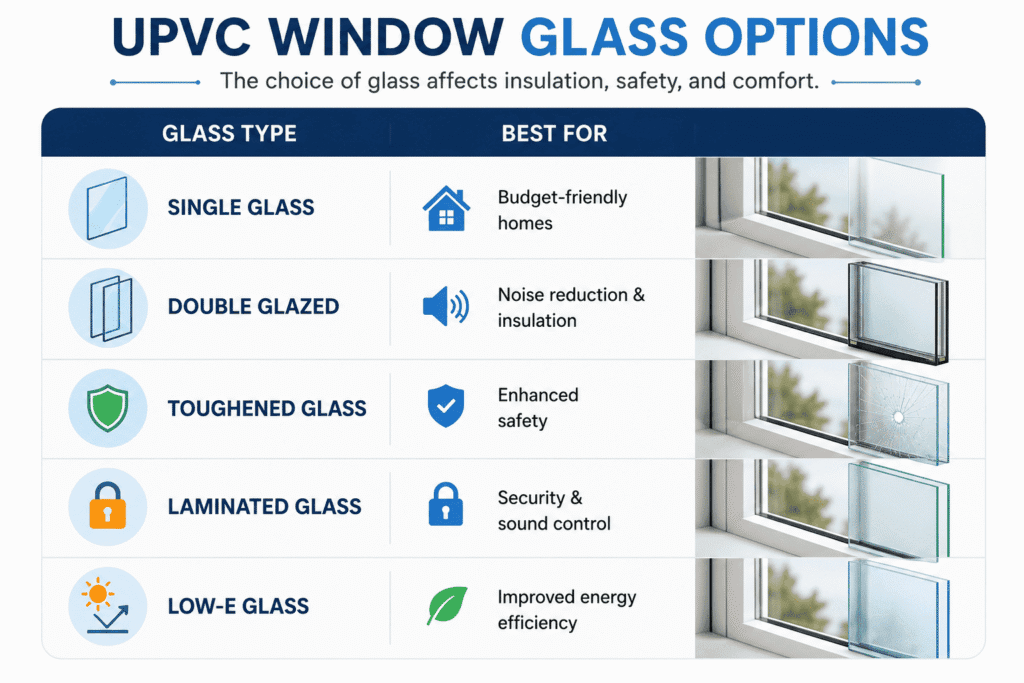
Selecting the appropriate glass based on your climate and lifestyle can significantly improve the performance of your UPVC windows.
UPVC Windows Price in India (2026)
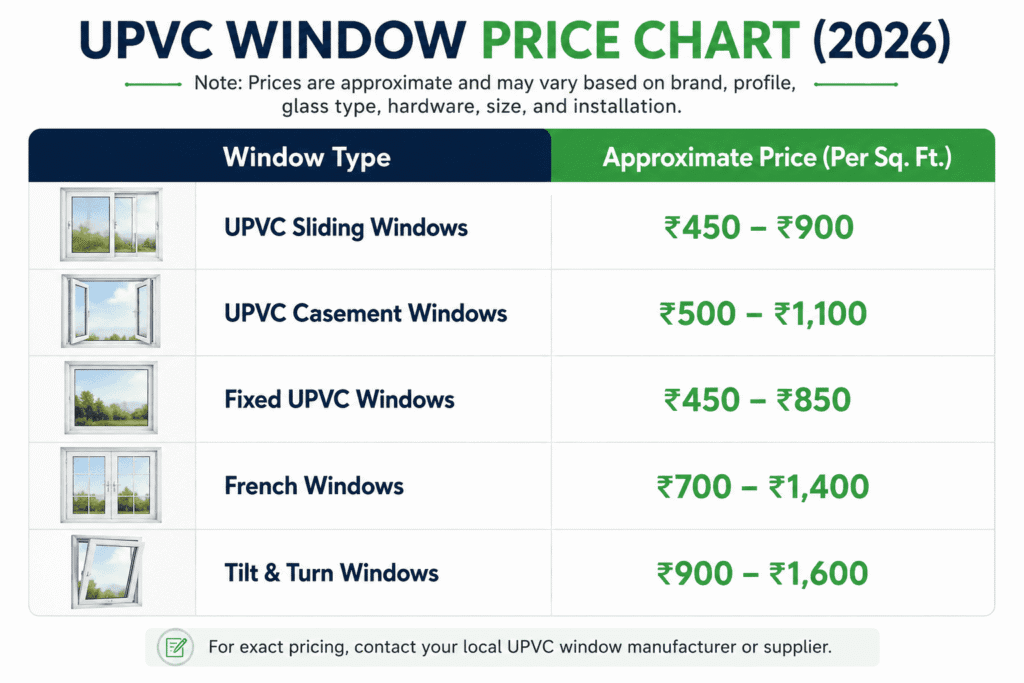
One of the most common questions homeowners ask is, “How much do UPVC windows cost in India?” The answer depends on several factors, including the window style, profile brand, glass type, hardware quality, and installation requirements.
On average, the UPVC window price in India ranges from ₹450 to ₹1,600 per sq. ft. depending on the specifications.
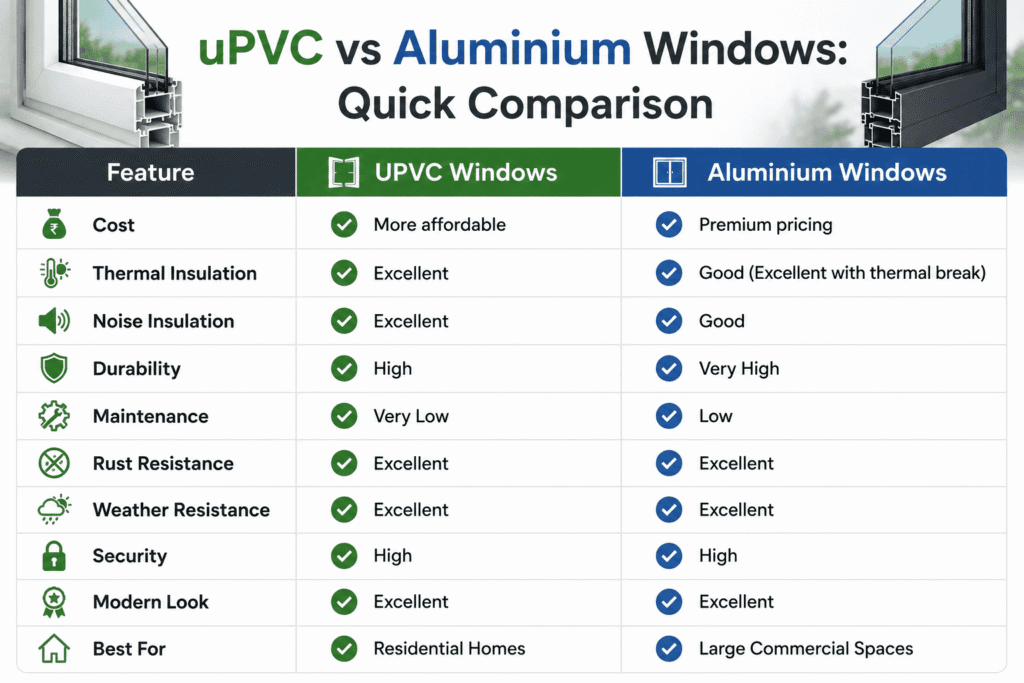
UPVC Windows vs Aluminium Windows
Many homeowners compare UPVC windows vs aluminium windows before making a purchase. Both materials have their advantages, but the right choice depends on your budget, climate, and design preferences.
Common Mistakes to Avoid When Buying UPVC Windows
Buying UPVC windows for home is a long-term investment. Avoid these common mistakes to ensure you get the best value for your money.
1. Choosing Based Only on Price
The cheapest option isn’t always the best. Low-cost profiles often compromise on strength, insulation, and hardware quality.
Instead, compare:
- Profile thickness
- Warranty
- Hardware quality
- Glass specifications
- Installation service
2. Ignoring Profile Quality
A good-quality UPVC profile provides:
- Better structural strength
- Longer lifespan
- Improved insulation
- Better weather resistance
Always ask about profile certifications and specifications before purchasing.
3. Selecting Poor Quality Hardware
Even premium UPVC frames can perform poorly if fitted with low-quality hardware.
Ensure your windows include:
- Multi-point locking systems
- Stainless steel hinges
- Premium rollers
- Durable handles
4. Choosing the Wrong Glass
Glass contributes significantly to a window’s performance.
For example:
- Double-glazed glass improves insulation and reduces outside noise.
- Laminated glass enhances security.
- Low-E glass minimizes heat transfer.
Selecting the right glass ensures maximum comfort and energy savings.
5. Poor Installation
Improper installation can cause:
- Water leakage
- Air gaps
- Operational issues
- Reduced insulation
- Shorter window lifespan
Always hire experienced professionals for installation.
6. Overlooking Warranty and After-Sales Service
Before finalizing your purchase, check:
- Profile warranty
- Hardware warranty
- Glass warranty
- Installation warranty
- Customer support availability
Reliable after-sales service ensures peace of mind if repairs or adjustments are needed in the future.
Maintenance Tips for UPVC Windows
One of the biggest advantages of UPVC windows is their low maintenance. Unlike wooden frames, they do not require painting or polishing.
Simple Maintenance Checklist
- Clean frames with mild soap and water every few months.
- Avoid harsh chemicals or abrasive cleaners.
- Lubricate hinges and locking mechanisms annually.
- Clean drainage holes to prevent water buildup.
- Inspect rubber gaskets for wear or damage.
- Tighten loose screws and hardware if needed.
Following these simple practices will help your windows remain functional and attractive for decades.
Who Should Choose UPVC Windows?
UPVC windows are suitable for a wide range of residential and commercial properties.
They are ideal for:
- Independent houses
- Apartments and flats
- Luxury villas
- Farmhouses
- Commercial offices
- Schools
- Hospitals
- Hotels
- Home renovation projects
Whether you’re building a new property or upgrading an existing one, UPVC windows provide a durable and stylish solution.
If you’re renovating your home, you may also find inspiration in our guide on Living Room False Ceiling Design for creating modern and energy-efficient interiors.
Conclusion
UPVC windows have changed how Indian homeowners think about building and updating their homes.They are very strong, can handle bad weather, help keep your home warm, and don’t need much care, making them a smart choice for most houses. Before you buy, look at more than just the price—check the quality of the frame, the type of glass, the hardware, the warranty, and the installation process. Finding the best mix of these factors will give you better results, more comfort, and a longer-lasting return on your investment.
If you are building a new house or doing a renovation, choosing high-quality UPVC windows can make your home more energy efficient, quieter, safer, and more stylish.
For expert advice on building, decorating, and improving your home, visit the LineMark for more information.You can find articles like UPVC vs Aluminium Windows, What Is PCC in Construction, Open Kitchen Design, and Living Room False Ceiling Design to help you make smart choices for your ideal home.
Frequently Asked Questions (FAQs)
1. What are UPVC windows, and why are they popular in India?
UPVC windows are made from unplasticized polyvinyl chloride, a durable, weather-resistant material that doesn’t rust, rot, or corrode. They are popular in Indian homes because they offer excellent thermal insulation, noise reduction, low maintenance, and long-lasting performance, making them suitable for various climates across the country.
2. Are UPVC windows better than traditional wooden or aluminum windows?
UPVC windows are often preferred for their energy efficiency, low maintenance, and resistance to moisture, termites, and corrosion. While wooden windows require regular upkeep and aluminum conducts more heat, UPVC provides better insulation and durability, making it a practical choice for most residential properties.
3. How long do UPVC windows last?
High-quality UPVC windows typically last between 25 and 35 years when installed correctly and maintained properly. Their lifespan depends on factors such as product quality, hardware, installation, and exposure to environmental conditions. Regular cleaning and periodic hardware checks help ensure long-term performance.
4. Are UPVC windows suitable for all Indian weather conditions?
Yes, UPVC windows are designed to perform well in India’s diverse climate. They resist heavy rain, humidity, intense sunlight, and coastal moisture without rusting or warping. Their excellent insulation properties also help maintain indoor comfort while improving energy efficiency throughout the year.
5. How do I choose the right UPVC windows for my home?
When buying UPVC windows, consider the frame quality, glass type, hardware, security features, energy efficiency, and installation expertise. Choosing products from a trusted manufacturer and working with experienced installers ensures better durability, performance, and long-term value for your investment.