Table of Contents
ToggleChoosing the proper windows is a critical decision when building a new home or upgrading an existing one. While windows improve the appearance of your home, they also have an impact on energy efficiency, indoor comfort, ventilation, security, maintenance costs, and long-term property values.
UPVC vs Aluminum Windows is a popular comparison among homeowners, architects, and builders nowadays. Both materials are long-lasting, contemporary, and performance-oriented, but they serve different purposes.
UPVC windows are well-known for their outstanding thermal insulation, superb soundproofing, affordability, and little maintenance. Aluminum windows, on the other hand, are popular due to their remarkable strength, slim frames, larger glass panels, and modern appearance.
So, which window material is the better choice in 2026?
The answer is determined by various criteria, including your budget, local climate, home design, energy-efficiency objectives, maintenance preferences, and long-term performance expectations. While windows improve the appearance of your home, they also have an impact on energy efficiency, indoor comfort, ventilation, security, maintenance costs, and long-term property values.
UPVC vs Aluminum Windows is a popular comparison among homeowners, architects, and builders nowadays. Both materials are long-lasting, contemporary, and performance-oriented, but they serve different purposes. In this detailed comparison of UPVC vs aluminum windows, we’ll look at cost, energy efficiency, durability, maintenance, security, noise insulation, weather resistance, lifetime, and design flexibility to help you make an informed selection.
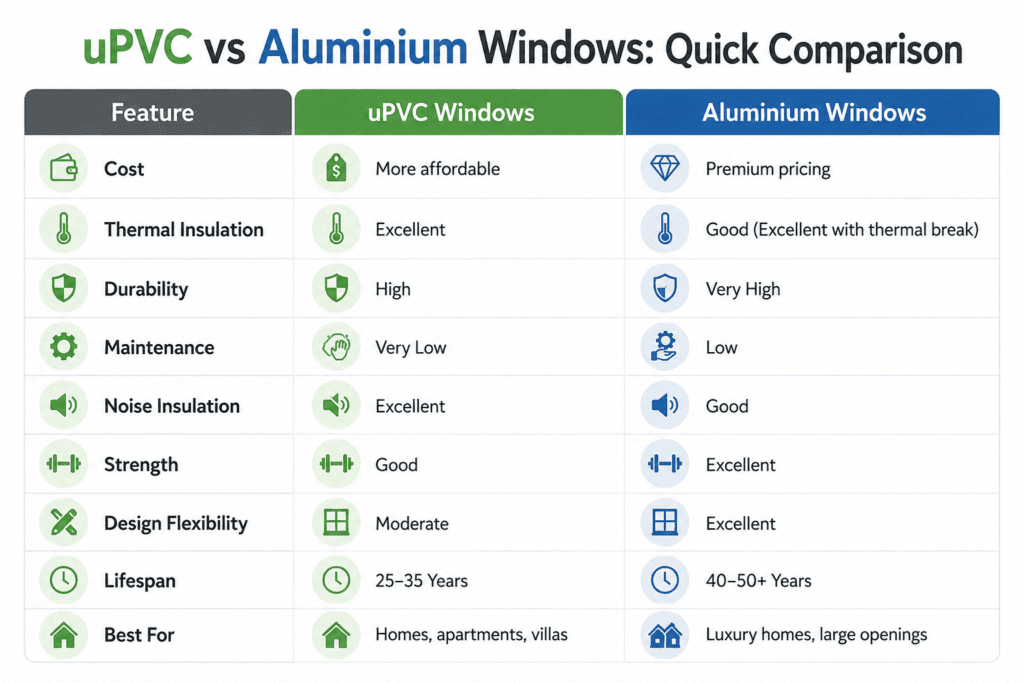
UPVC vs Aluminium Windows: Quick Comparison
1. Cost: Which Window Offers Better Value?
Budget is often the first consideration when comparing UPVC vs Aluminium Windows.
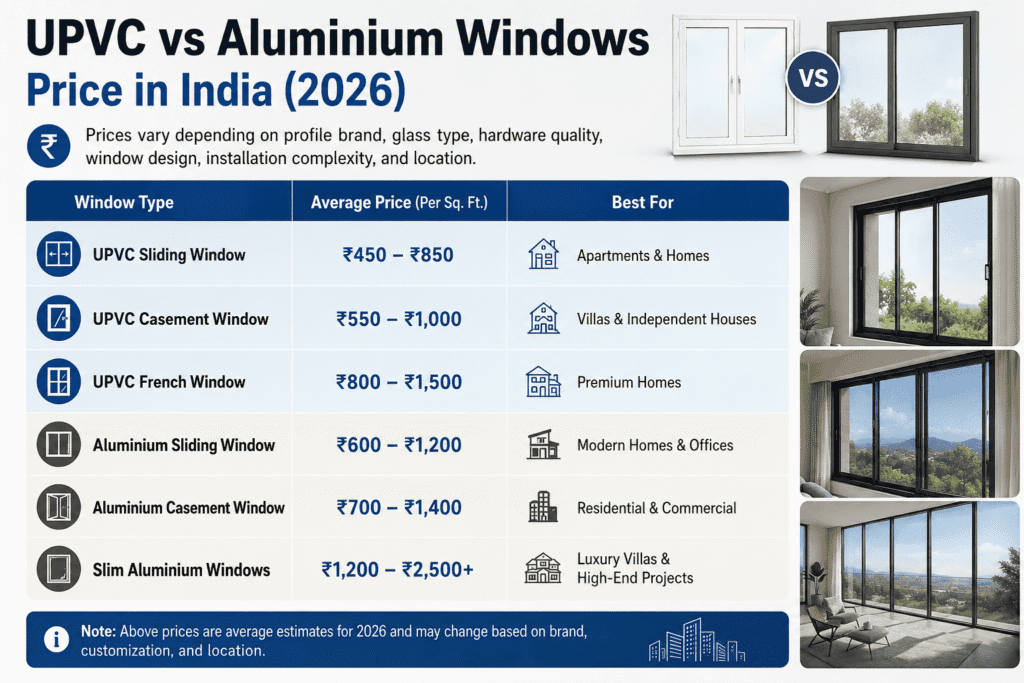
For most residential projects, UPVC windows are the more economical option. Their lower manufacturing costs make them ideal for homeowners who want durable, energy-efficient windows without exceeding their construction budget.
Aluminium windows generally cost more because of the material’s strength, premium finish, and ability to support larger glazing systems. Although the upfront investment is higher, many homeowners consider it worthwhile for modern architectural designs.
Practical Example
Suppose you’re constructing a three-bedroom home with around twelve windows.
Choosing UPVC windows can significantly reduce your window budget, allowing you to invest in upgrades such as double glazing, premium hardware, smart locking systems, or interior finishes.
If you’re building a luxury villa with large glass façades and panoramic views, aluminium windows deliver greater design flexibility and long-term aesthetic value.
Verdict
Winner: UPVC for affordability.
Aluminium for premium design and luxury appeal
2. Energy Efficiency: Which Keeps Your Home Comfortable?
Energy-efficient homes are becoming increasingly important in 2026 due to rising electricity costs and warmer climates.
This is where UPVC windows outperform aluminium.
UPVC is a poor conductor of heat, making it an excellent natural insulator. It helps reduce heat transfer between indoor and outdoor environments, resulting in:
- Lower cooling costs
- Better indoor comfort
- Improved AC efficiency
- Reduced energy consumption
- Enhanced thermal performance throughout the year
Standard aluminium frames conduct heat much faster than UPVC. However, modern aluminium systems equipped with thermal break technology significantly improve insulation by preventing heat transfer through the frame.
Although thermally broken aluminium performs well, it usually comes at a higher price.
Verdict
Winner: UPVC Windows
3. Strength and Durability
If structural strength is your priority, aluminium clearly leads.
Aluminium has an exceptional strength-to-weight ratio, allowing manufacturers to produce slim yet incredibly strong window frames capable of supporting large glass panels.
This makes aluminium the preferred choice for:
- Floor-to-ceiling windows
- Sliding glass doors
- Corner glazing
- Contemporary villas
- Commercial buildings
UPVC windows are highly durable for standard residential applications and often include galvanized steel reinforcement. However, they are not suitable for extremely wide openings.
Verdict
Winner: Aluminium Windows
4. Maintenance: Which Is Easier to Maintain?
One of the biggest advantages of both materials is their low maintenance compared to traditional wooden windows.
UPVC windows do not rust, corrode, peel, or require repainting. Routine cleaning with mild soap and water is usually enough to keep them looking new.
Aluminium windows are also easy to maintain. Their powder-coated finish resists fading, corrosion, and weather damage, requiring only occasional cleaning.
For homeowners looking for a hassle-free solution, both perform exceptionally well.
Verdict
Winner: UPVC (Slight Edge)
5. Noise Insulation: Which Creates a Quieter Home?
If your home is located near busy roads, airports, schools, or commercial areas, sound insulation becomes an important factor.
UPVC naturally reduces sound transmission due to its insulating properties. Combined with double-glazed glass, it creates a noticeably quieter indoor environment.
Aluminium windows also provide excellent acoustic performance when paired with acoustic or double glazing. However, the frame itself transfers more vibration than UPVC.
Verdict
Winner: UPVC Windows
6. Design & Aesthetics
When it comes to modern architecture, aluminium windows stand out.
Their slim profiles allow for larger glass areas, maximizing natural light while creating a sleek, minimalist appearance.
Aluminium windows are particularly suitable for:
- Luxury villas
- Contemporary homes
- High-rise apartments
- Premium commercial buildings
UPVC windows are available in multiple colours and wood-finish options, making them suitable for most residential properties. However, their frames are generally thicker than aluminium.
Verdict
Winner: Aluminium Windows
7. Weather Resistance
Both UPVC and aluminium windows are engineered to withstand challenging weather conditions.
UPVC Windows
- Moisture resistant
- Rust-free
- UV resistant
- Termite resistant
- Ideal for humid climates
Aluminium Windows
- Corrosion resistant
- Excellent in coastal regions
- Powder-coated for long-lasting protection
- Marine-grade finishes available
The actual performance depends on product quality and professional installation.
Verdict
Winner: Tie
8. Lifespan: Which Lasts Longer?
Windows are a long-term investment, making durability an important consideration.
A premium-quality UPVC window typically lasts 25–35 years with regular maintenance.
High-quality aluminium windows often last 40–50 years or more, thanks to their structural strength and corrosion-resistant finishes.
Verdict
Winner: Aluminium Windows
Which Window Should You Choose in 2026?
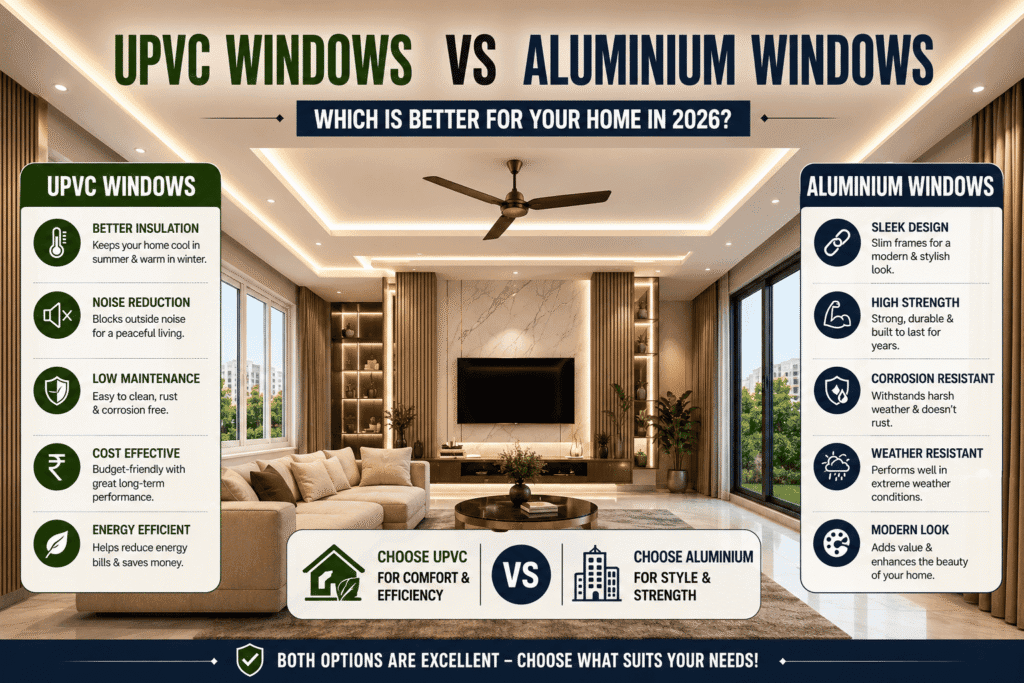
The better option depends on your home’s design and your priorities.
Choose UPVC windows if you:
- Want better insulation and energy efficiency.
- Have a fixed construction budget.
- Need excellent soundproofing.
- Prefer low-maintenance windows.
- Are building a standard residential home.
Choose Aluminium windows if you:
- Prefer slim, modern frames.
- Need large glass openings.
- Are building a premium or luxury home.
- Want maximum structural strength and longevity.
- Don’t mind paying more for aesthetics and durability.
UPVC vs Aluminium Windows Cost Comparison (2026)
UPVC Windows – Pros & Cons
Advantages of UPVC Windows
- Excellent thermal insulation, helping reduce indoor heat.
- Better soundproofing for homes near busy roads.
- Resistant to rust, termites, and corrosion.
- Requires very little maintenance.
- Energy-efficient and can help lower cooling costs.
- Suitable for Indian weather conditions.
- Affordable compared to premium aluminium systems.
Disadvantages of UPVC Windows
- Limited frame color options compared to aluminium.
- Not ideal for extremely large glass panels.
- Lower structural strength than aluminium for oversized windows.
- Lower-quality profiles may discolor over time if not UV stabilized.
Aluminium Windows – Pros & Cons
Advantages of Aluminium Windows
- High structural strength.
- Supports large glass panels with slim frames.
- Modern and premium appearance.
- Wide range of colors and powder-coated finishes.
- Long service life with proper maintenance.
- Fully recyclable material.
Disadvantages of Aluminium Windows
- Higher initial investment.
- Standard aluminium conducts heat more than UPVC (unless thermally broken).
- Slightly less effective for noise insulation.
- May require periodic maintenance in coastal areas.
Final Verdict: UPVC vs Aluminium Windows
There isn’t a single winner in the UPVC vs Aluminium Windows debate because each material is designed for different requirements.
For most homeowners, UPVC windows offer the best overall value, combining affordability, energy efficiency, excellent insulation, low maintenance, and reliable long-term performance. They are an excellent choice for apartments, independent houses, and family homes where comfort and cost savings are priorities.
If you’re designing a premium residence with expansive glass panels, panoramic views, and a modern architectural style, aluminium windows are worth the additional investment. Their superior strength, slimmer profiles, and extended lifespan make them ideal for luxury projects.
Before making your final decision, consider your budget, local climate, architectural style, energy-efficiency goals, and maintenance expectations. Regardless of the material you choose, investing in high-quality window systems and professional installation is essential to ensure optimal performance, durability, and long-term value.
Frequently Asked Questions (FAQs)
1. Which is better: uPVC vs aluminium windows?
When comparing uPVC vs aluminium windows, there is not a single best choice. uPVC windows are more energy-efficient, affordable, and require minimal maintenance, making them ideal for most homes. Aluminium windows offer greater strength, slimmer frames, and modern aesthetics, making them suitable for larger openings and contemporary designs.
2. Are uPVC windows cheaper than aluminium windows?
Yes, uPVC windows are generally more affordable than aluminium windows. They have lower material and installation costs while offering excellent thermal insulation, soundproofing, and weather resistance. Aluminium windows cost more because of their superior strength, premium appearance, and ability to support larger glass panels.
3. Which lasts longer: uPVC or aluminium windows?
Both window types are highly durable when manufactured with quality materials. uPVC windows typically last 25–35 years, while aluminium windows can last 40–50 years or more with proper installation and maintenance. Regular cleaning and quality hardware also contribute to extending their lifespan.
4. Are uPVC windows suitable for Indian weather?
Yes, uPVC windows are well suited for Indian weather conditions. They resist moisture, corrosion, termites, and UV exposure while providing excellent thermal and sound insulation. These properties make them an ideal choice for homes in hot, humid, coastal, and high-rainfall regions across India.
5. Should I choose uPVC or aluminium windows for my home?
Your choice between uPVC vs aluminium windows depends on your budget, design preferences, and performance requirements. Choose uPVC for better insulation, energy efficiency, and affordability. Select aluminium if you need slim profiles, larger glass areas, exceptional strength, and a premium modern appearance.